
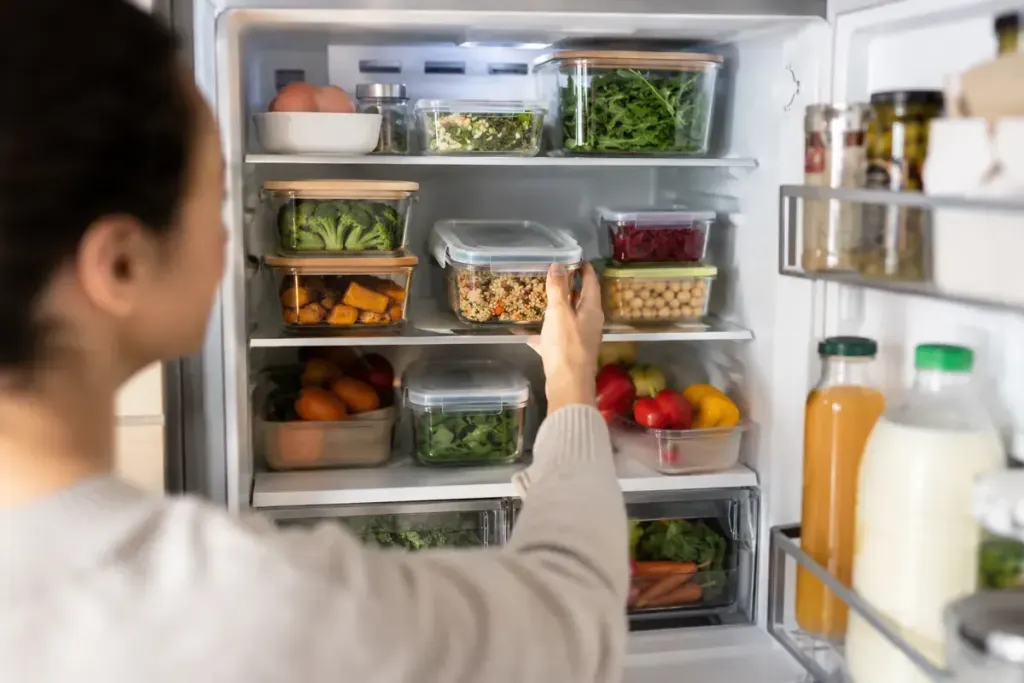
The half-used ingredient is rarely forgotten because it is unimportant. It is forgotten because a newer packet lands in front of it. By the time the next shopping trip arrives, the fridge contains several beginnings of meals and no clear picture of what needs attention.
A use-it-first area can make those decisions easier. It is a visibility habit, not a new storage rule: food still needs to be kept in the correct conditions and used within the relevant safety guidance.
Begin with a short inventory
Before moving anything, check what is already in the fridge. Follow product labels and official food-safety advice; discard food that is unsafe rather than trying to rescue it for the sake of avoiding waste. Do not use smell or appearance as the only test of safety.
The US EPA’s guidance on preventing food waste at home recommends planning around food you already have and improving storage habits. A small priority area is one way to put that planning into practice without building a complicated tracking system.
Choose visibility without breaking storage rules
Use a suitable clear container or a designated part of a shelf for foods that can safely be stored together. Keep raw foods appropriately separated and contained, and do not move items to an unsuitable temperature zone just to make the display look tidy. Follow your appliance and food-storage guidance.
The area might hold an opened jar that must be refrigerated, a covered portion of cooked vegetables and an ingredient needed for tomorrow’s meal. Label prepared food as appropriate so you do not have to guess when it was made. If several household members cook, explain what the area means.
Turn the shelf into a meal decision
Before writing the shopping list, look at the priority area and choose a realistic next use. A hypothetical household with cooked vegetables and an unopened pack of wraps might plan lunch around those ingredients, buying only what is missing. This is a planning example, not advice that every leftover is suitable for the same storage period.
Keep the meal modest enough to happen. A leftover that requires five new ingredients and an unfamiliar recipe may not be the best option on a busy evening. Freezing can be useful for suitable foods when done within safe handling guidance; it does not reset the safety of food already mishandled.
Review the habit after a week
Notice what still gets overlooked. Perhaps the container is too deep, the label is unclear or nobody checks the fridge before shopping. Adjust that one obstacle instead of adding more rules. A quick photograph before leaving for the shop can also help you remember what is there.
The aim is a fridge that gives you a clearer next action. When the use-it-first area becomes another crowded storage box, reduce it and start again. Less waste often begins with seeing one useful ingredient at the right moment.