
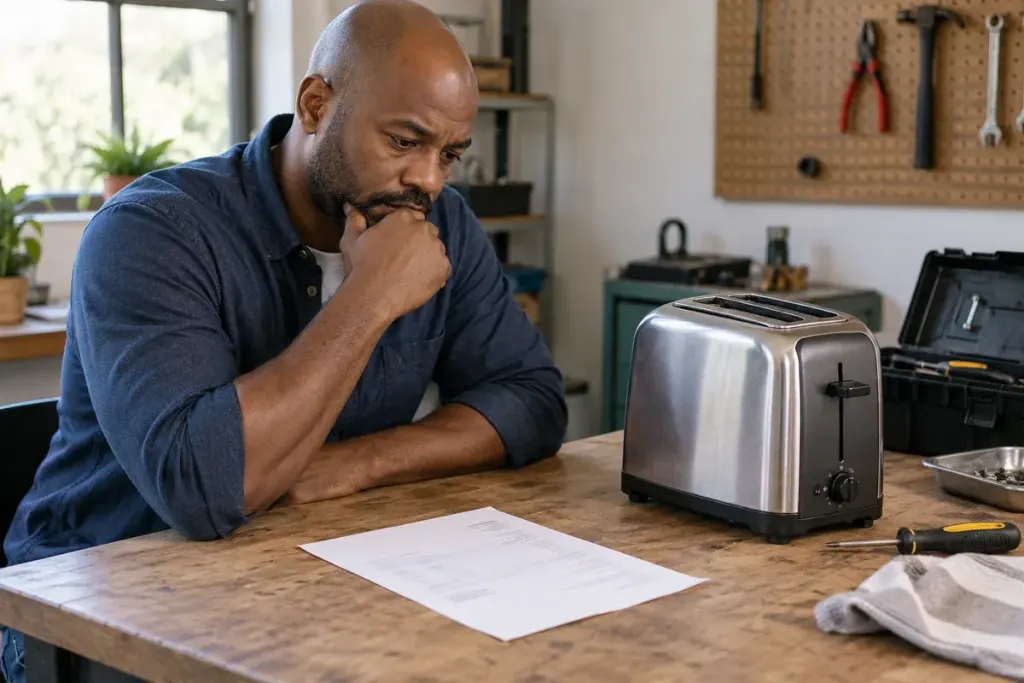
“Have a look and fix it” sounds convenient until the repairer discovers a second fault. A useful repair agreement says what can happen next without another call—and what cannot.
Separate inspection from repair
Ask whether there is a diagnostic charge, whether it is included if you proceed, and what happens if no repair is possible. Describe the fault and any circumstances that reproduce it. Avoid presenting your own diagnosis as a confirmed problem unless it has actually been checked.
Request an itemised estimate where practical: parts, labour, taxes and any collection or delivery costs. Clarify whether the figure is fixed or provisional. Consumer-law terminology varies by location, so ask the business to explain what its document commits to rather than relying on a familiar word.
Set an approval boundary
An illustrative instruction is: “Please contact me before the total exceeds 80, including the inspection fee.” The right amount depends on the item and your circumstances. Make sure the business records the limit and has a working contact route.
Also ask how long the estimate remains valid, whether replacement parts are available, and what warranty applies to the completed work. If an item stores personal data, discuss access and handling before handing it over; do not provide unrelated account passwords casually.
Compare the proposed repair with the usefulness you expect from the item afterwards, not only its original purchase price. A cheap fix that leaves the main problem unresolved may not be good value. Conversely, a familiar repairable item may serve you better than an unnecessary replacement.
Keep the job reference and written agreement. When collecting the item, ask what was done and check the reported fault where practical. The spending limit is most useful when both sides understood it before work began.