
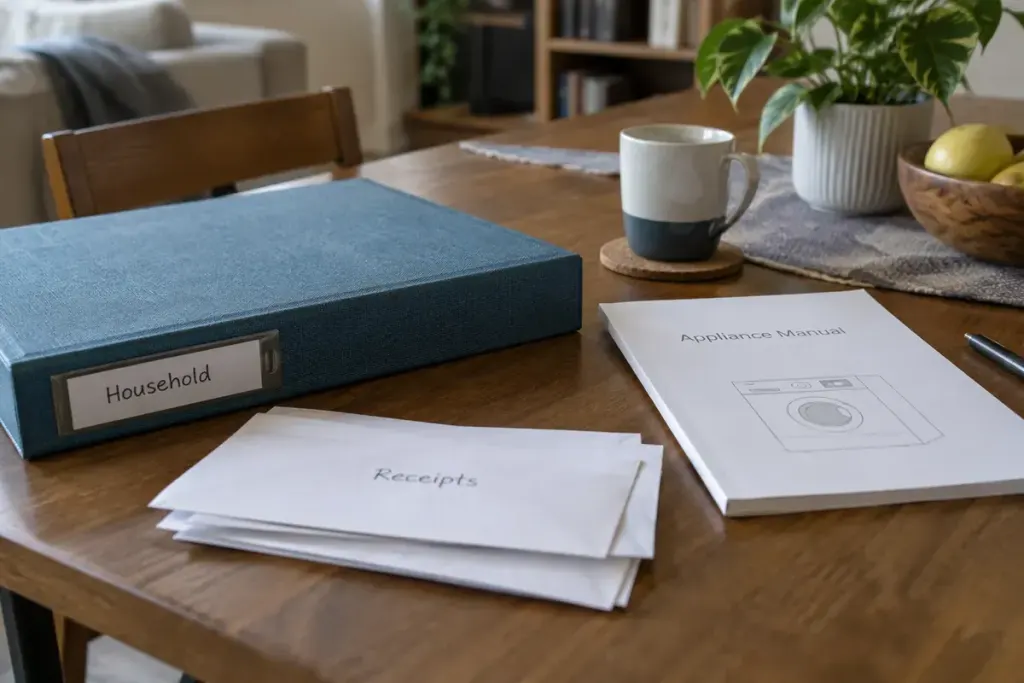
The appliance stops working, and you remember buying it recently. You do not remember which email address received the receipt, whether the order was placed through a marketplace or where the serial number is recorded. A small filing habit can save an evening of searching.
Keep purchase evidence with the item in mind, not only the month it arrived. A folder called “kettle” is easier to search when the kettle breaks than an unnamed photograph buried among holiday pictures.
Make a record with a clear identity
Save the receipt or invoice, seller details, purchase date and relevant product identifier. Keep any warranty or service document that came with the item. A photograph of a serial-number label can help when the label becomes difficult to reach, but avoid sharing it publicly without a reason.
Use a filename that combines the item and date. For an invented example, “desk-lamp_2026-10_receipt” gives you a useful search term even if you forget the retailer.
Retain original digital files where available and check that scans or photographs are legible. A blurred receipt image is not much of an archive. Store the folder somewhere private, especially if it contains addresses or payment information.
Keep terms separate from assumptions
Return windows, guarantees and statutory consumer rights depend on the seller, product and jurisdiction. Do not write a guessed expiry date as though it settles every possible claim. Keep the actual terms and seek appropriate local advice when a dispute arises.
If you contact support, add the date, reference and agreed next step to the same record. Preserve important messages instead of relying on a conversation in an app you may later delete.
File at the easy moment
The easiest time is often when you unbox the product or receive the order email. Save the evidence, record the model and remove unnecessary packaging according to the return conditions you actually need to preserve.
Review the folder occasionally so duplicates and irrelevant documents do not overwhelm it. The aim is not to keep every scrap forever. It is to find the right proof when a repair, return or ownership question makes the purchase matter again.