
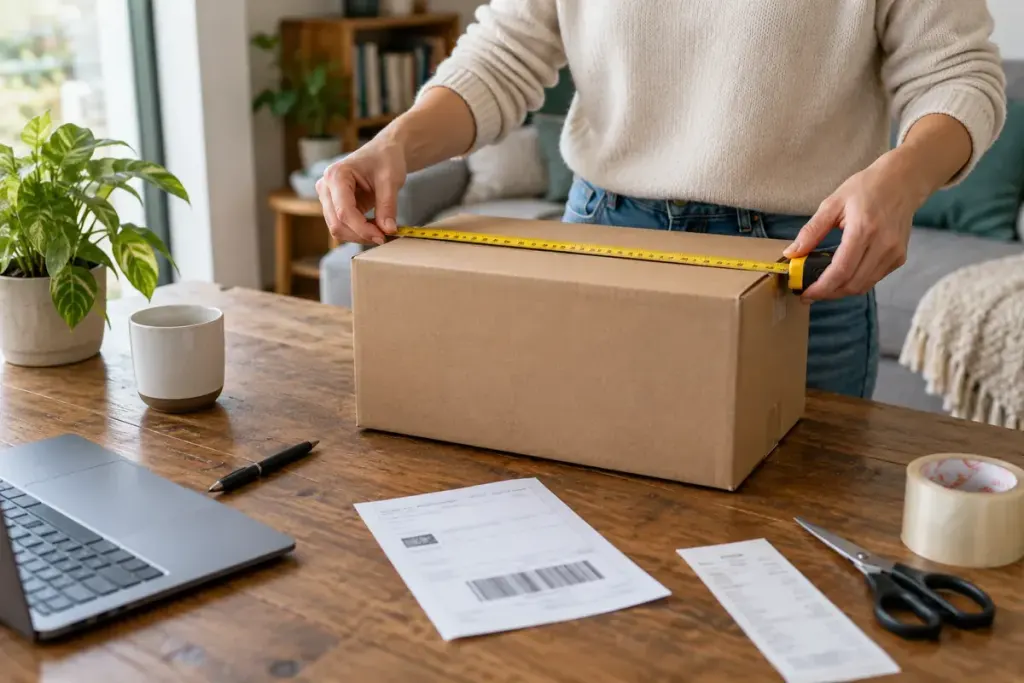
A low item price can hide an expensive return journey. Before ordering something whose fit, size or finish is uncertain, read how it would get back to the seller if it did not suit you.
Find the return address and check whether it is in the same country as the storefront suggests. Ask who pays return postage, which service is required and whether the seller supplies a label. Keep product-specific exclusions separate from the general returns page.
Compare the complete decision
Imagine two otherwise comparable items. One costs less but requires you to arrange an international return; the other includes a suitable return label. The cheaper item may still be the right choice, but the comparison should include the uncertainty and effort of returning it.
For bulky or fragile goods, think about packaging before discarding it. A courier may have size limits or handling requirements that make an ordinary drop-off service unsuitable. Do not assume the original delivery charge is the price of sending the parcel back.
- Save the listing and the returns terms shown when you order.
- Check the deadline and the event from which it is measured.
- Ask how a return is authorised and tracked.
- Keep proof of dispatch and the parcel reference.
Separate a change-of-mind return from a report that goods arrived damaged or incorrect. Different procedures and legal rights may apply. Contact the seller promptly with a factual description and follow the rules relevant to your location; this article does not determine your consumer-law entitlement.
When comparing options, include a simple “if it must go back” note beside the price. That small addition can make a purchase decision clearer without requiring you to predict every problem.
A useful bargain is one whose likely cost and practical conditions you understand. The checkout total is only the beginning of that assessment when a return is a realistic possibility.