
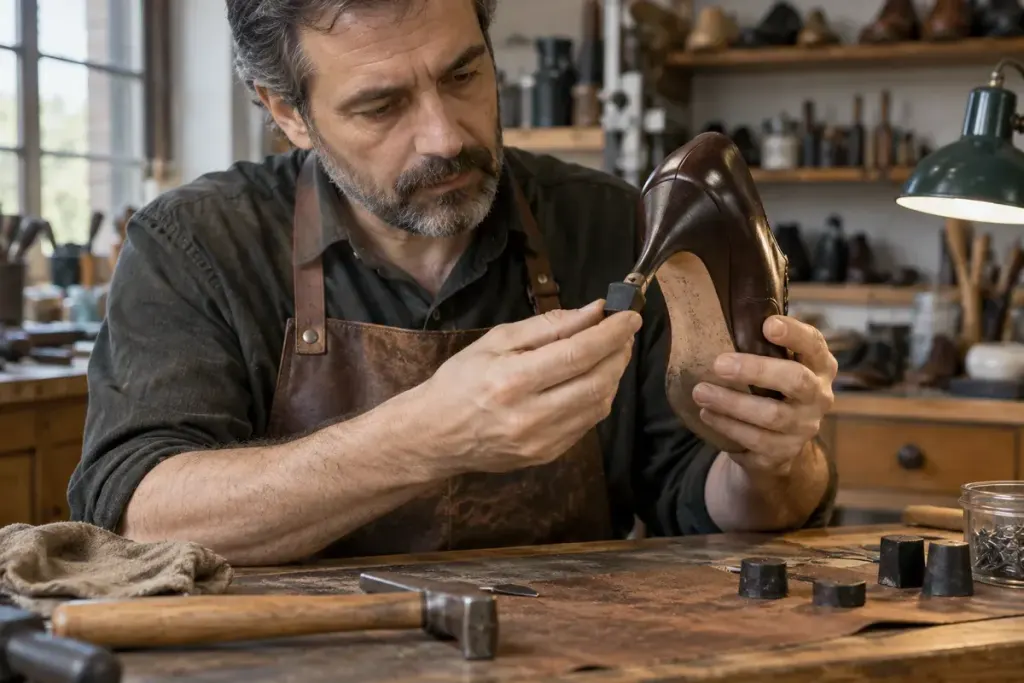
The small piece that meets the ground at the bottom of a heel takes repeated wear. On many shoes, that heel tip or top piece is replaceable. A worn contact surface does not automatically mean the entire heel or shoe has reached the end of its life.
Look from the side and underneath
Place the shoes together on a level surface and inspect both heels. Note uneven wear, a missing piece, exposed material beneath the contact layer or a heel that appears loose. These are useful observations to give a repairer, not enough information to prescribe the same repair for every construction.
If a hard pin or internal part has become exposed, stop using the shoe until it has been assessed. Continuing to walk on damaged components can affect grip and damage the structure or the surface beneath your feet.
Bring the pair to the appointment
A repairer can compare heel height, balance and wear across both shoes. Ask whether only the contact piece needs replacement, whether the underlying heel is sound and what material is suitable for that construction. Photographs can help with an initial enquiry, but they may not reveal movement or damage inside the assembly.
For an illustrative repair note, write: “Right heel contact layer worn more on the outer edge; left shoe still intact; please check both before replacing.” This communicates what you observed without diagnosing the reason for the wear.
Check the result before a long outing
After repair, inspect the join and try a short walk on a suitable surface. If the shoe rocks, feels uneven or the heel moves, return to the repairer. Avoid improvising with a random plug or adhesive whose suitability you cannot establish.
A quick inspection when cleaning shoes makes it easier to notice wear while the replaceable part is still present. It also gives you time to arrange a repair before the pair is needed for an event or journey.