
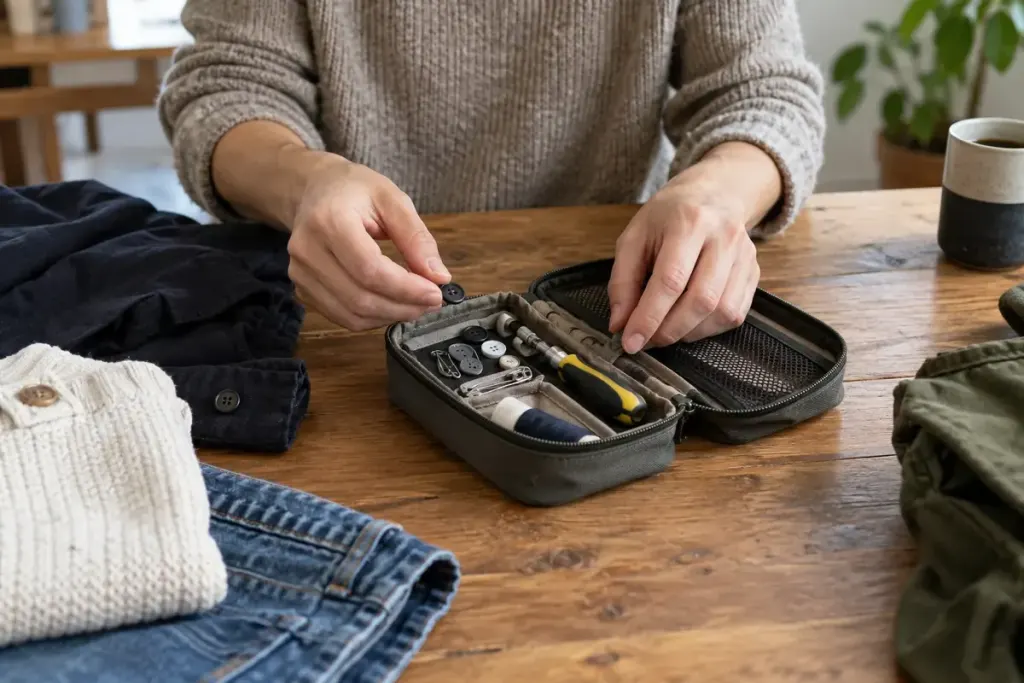
A travel repair kit is most useful when it matches the things in your bag. A collection of miniature tools can look reassuring yet leave you unable to replace the button that actually comes loose.
Before buying anything, inspect the clothes and luggage you plan to take. Repair weak seams and damaged fastenings at home. The kit should handle a small unexpected problem, not carry an already failing bag through an entire trip.
Choose a few specific jobs
For ordinary clothing, a small amount of suitable thread and a spare matching button may be useful if you know how to sew them. A compact patch compatible with your bag’s material can help with an appropriate minor repair. Check the patch instructions; one adhesive does not suit every fabric or coating.
Keep sharp items contained and verify current airport, airline and destination restrictions before packing them, especially in hand luggage. Do not assume a tool is permitted because it is small or marketed for travel. Leave unnecessary blades, liquids and specialist chemicals at home.
Know the limit of a temporary repair
A patch on a pocket is different from a repair to a load-bearing strap, footwear sole or safety-related item. If failure could cause injury or lose important belongings, seek a proper repair or replacement rather than trusting an improvised fix.
Carry only supplies you can use. Practise threading the needle or applying the patch to a scrap of suitable material before departure. Instructions saved offline are helpful, but they do not compensate for a material mismatch.
Store the kit in a small labelled pouch and keep it separate from medicines and toiletries. After a trip, replace what you used and remove items that repeatedly served no purpose. The best kit is not the one with the most components; it is the one that solves a likely minor problem without creating extra weight or a false sense of preparedness.