
An annual pass costs 90 currency units and an ordinary visit costs 18. Five visits appear to break even. The arithmetic is simple; deciding whether five visits will actually happen is the useful part.
These are fictional prices for an example. Divide the membership cost by the comparable single-visit price, then round up where necessary to find the first whole number of visits that reaches or exceeds the cost. If the pass is 95 and a visit is 18, five visits cost 90 and six cost 108.
Compare the pass with your actual alternative, including any concession or family ticket you qualify for. Comparing it only with the most expensive walk-up ticket can exaggerate the saving.
Check which dates, locations and activities are included. A pass may still require advance booking or exclude special exhibitions. Parking, transport and food can remain separate expenses.
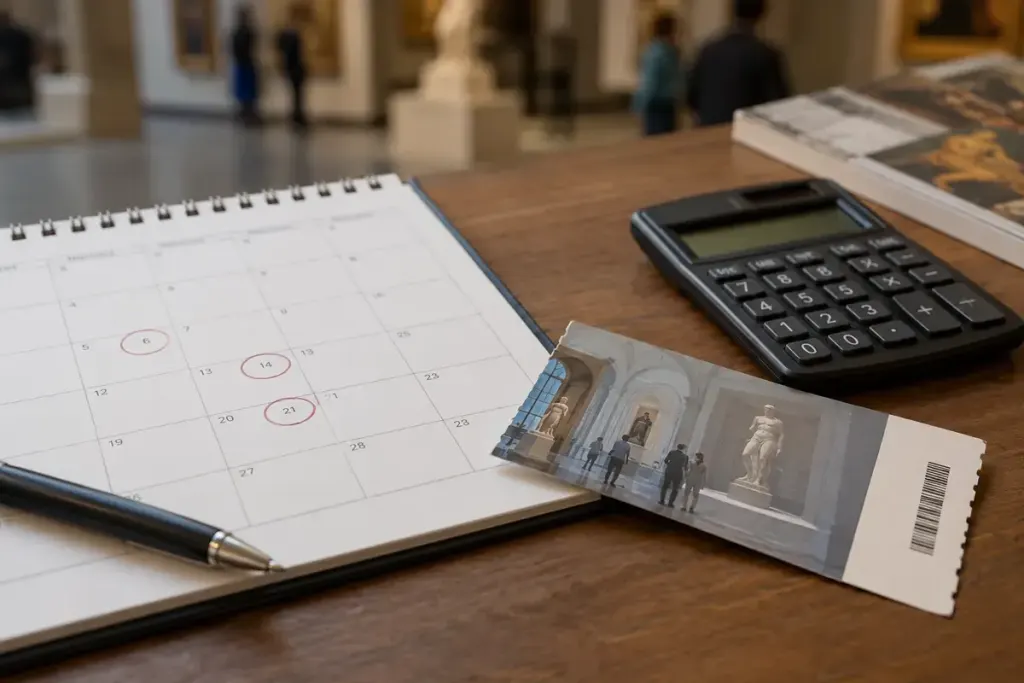
Put the likely visits on a calendar
Mark realistic opportunities rather than imagined weekly outings. Include holidays, work patterns and the distance to the venue. If the pass begins immediately, buying it months before your first likely visit reduces the period you can use.
Ask whether renewal is automatic, how cancellation works and whether unused time is refundable. Keep the renewal date somewhere you will see it before the next charge.
Non-price benefits can matter: a shorter visit without feeling obliged to see everything, or access to an activity you value. Describe those honestly rather than converting every possible benefit into invented savings.
If the decision is close, a single visit may help establish whether you enjoy the place enough to return. Check whether the venue offers an official upgrade arrangement before assuming today’s ticket can be credited. A membership is good value when it fits the life you are likely to live, not the attendance schedule you feel you ought to maintain.