
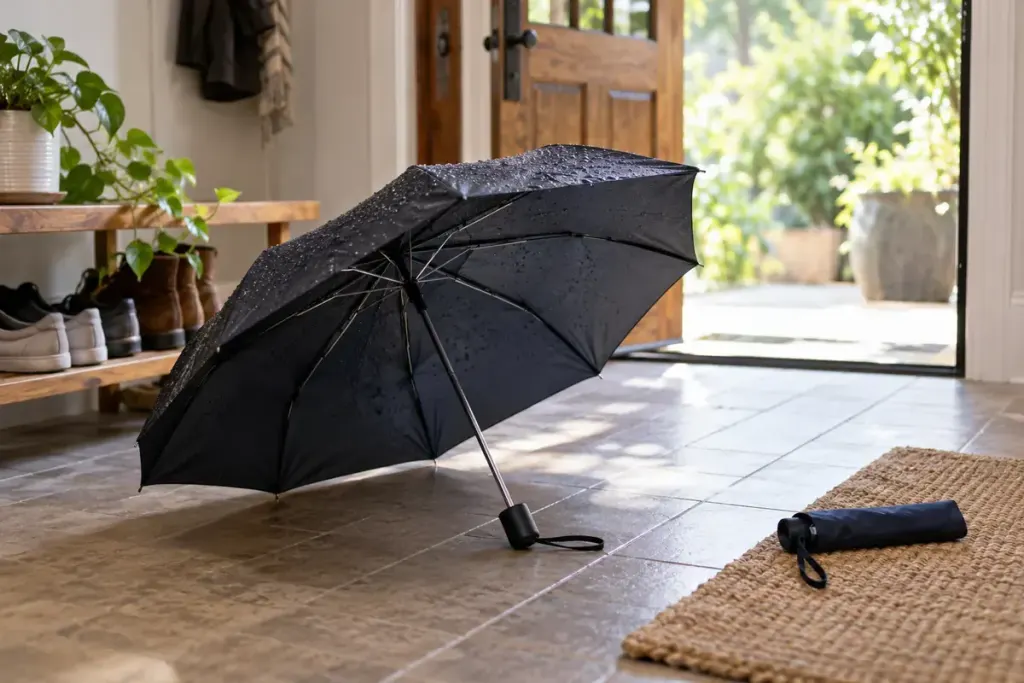
A compact umbrella earns its place in a travel bag by disappearing into a small sleeve. After a shower, though, packing it away immediately also packs away the water. The sleeve is useful for transport, but it should not become the umbrella’s permanent drying space.
Once you reach a suitable place, follow the maker’s care instructions and allow the umbrella to dry. The right arrangement depends on the design and the space available; opening it fully is not appropriate if it obstructs a corridor or creates a hazard.
Manage the wet journey first
Before entering a train, shop or shared building, remove excess water where permitted without shaking it over other people. Use the venue’s umbrella stand or cover if provided. Keep the wet fabric away from papers and electronics in your bag.
If the umbrella must stay enclosed briefly, make a reminder to take it out at the destination. A temporary waterproof bag helps contain drips but does not make trapped moisture disappear.
Choose a place that can tolerate drips
At home or in accommodation, use a ventilated area where water will not damage flooring or furniture. Keep the umbrella clear of doors, walking routes, heaters and anything it could snag. Check that children or pets cannot accidentally trigger or collide with the mechanism.
Let the sleeve dry separately if it is damp. Before closing the umbrella, check the folds rather than judging only the outside surface. Follow any manufacturer restrictions on cleaning, heat and direct sun.
Pack it for the next use
Close and secure the umbrella without forcing resistant ribs or tightly twisting wet fabric. Inspect obvious damage before the next trip and deal with a sticking mechanism according to the instructions rather than repeatedly firing it indoors.
A simple routine works well: contain drips during the journey, unpack at the destination, dry in a suitable place, then return to the sleeve. It takes little attention and prevents a useful travel item from being forgotten wet at the bottom of a bag.