
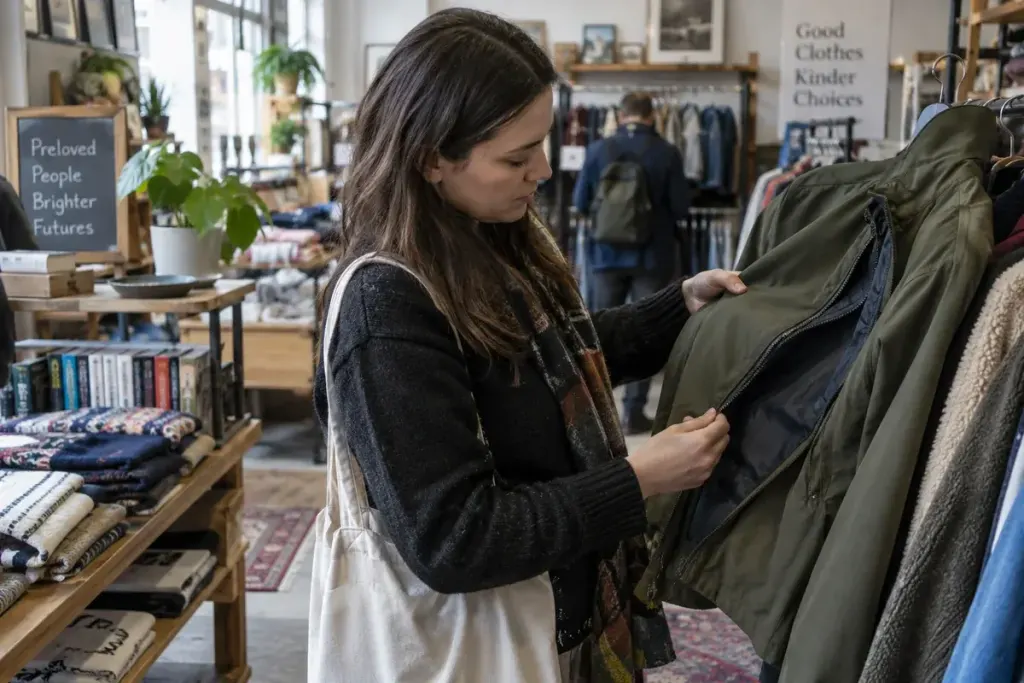
A low price makes a damaged garment easy to excuse: perhaps the zip can be changed, the lining repaired and the sleeves shortened. Sometimes that is a worthwhile project. Sometimes it is three separate jobs attached to something you do not actually want to wear.
Begin with fit and intended use. Try the garment where possible, move your arms and sit down if appropriate. Check that it works with the clothes and situations already in your life. A bargain that needs an entirely different wardrobe is not a small purchase.
Look where wear collects
Inspect underarms, cuffs, hems, pockets and areas under strain. Hold the fabric gently toward the light to look for thinning, without stretching or damaging it. Check fastenings, seams and lining separately. A loose button and a weakened fabric panel are very different repair problems.
Consider smell and care instructions as well. Do not assume that every stain or odour will disappear in a normal wash. If specialist cleaning is necessary, include that cost and effort before deciding whether the item is still attractive.
Choose a repair you genuinely want to do
Visible mending can make a garment more personal rather than less valuable. Oxfam’s guide to embroidering over holes offers one example of a creative repair. It does not mean every damaged fabric is suitable for the same treatment.
For work beyond your skills, ask a repairer or tailor about feasibility before buying where that is practical. Structural alterations can be more involved than they look. Keep a realistic budget for materials, professional labour and your own time.
- Would I want this if it were not discounted?
- Is the fabric sound enough for the proposed repair?
- Do I know who will do the work?
- Can I name a likely occasion when I will wear it?
It is reasonable to leave an interesting item behind when the answers are uncertain. The next buyer may have the right skills or a different use for it. Buying second-hand works best when attention replaces impulse: choose something with a believable path from the rail to regular wear, rather than from the rail to a growing repair pile.